
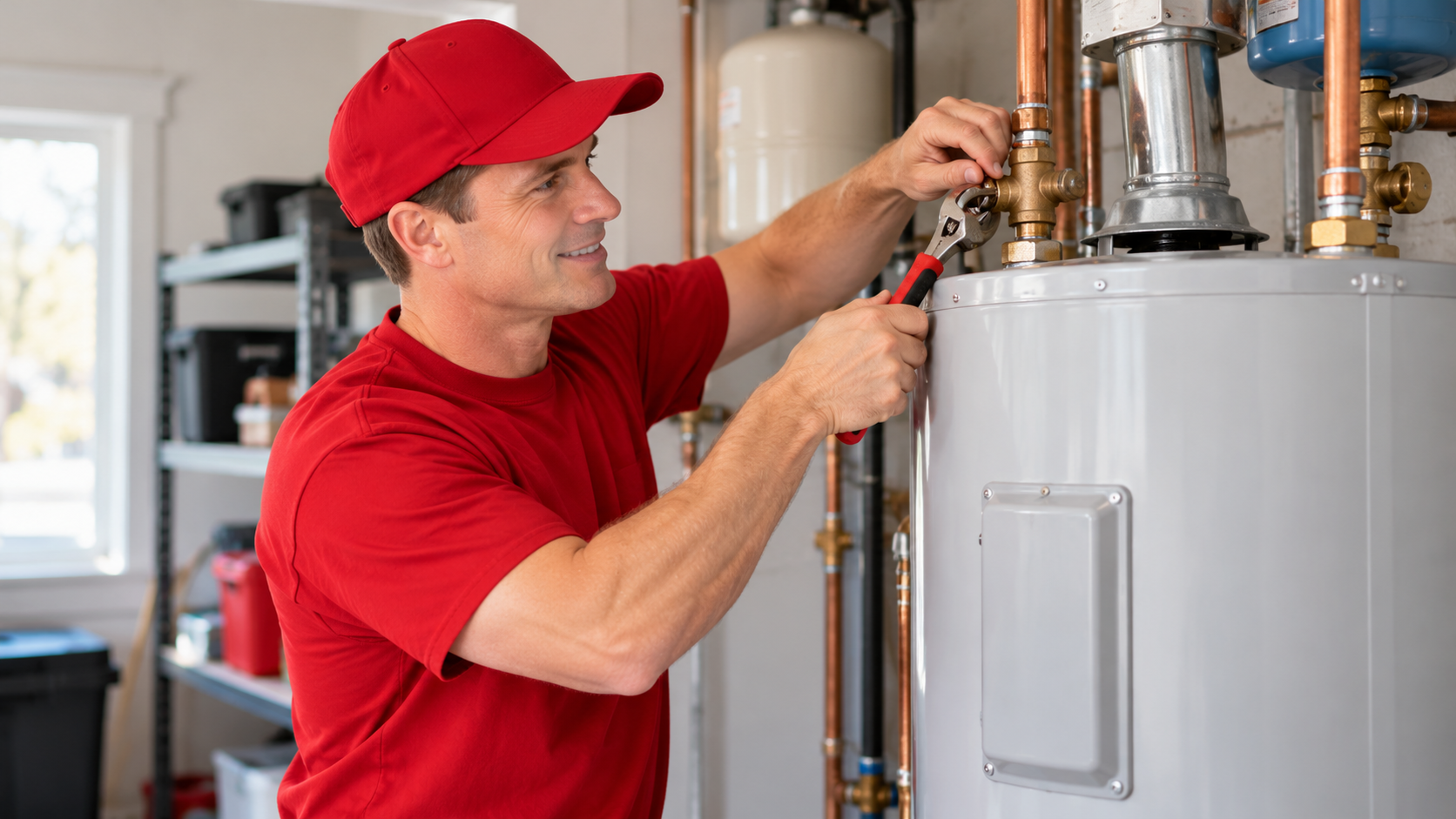
Your water heater is easy to ignore, until the hot water runs short on a cold morning. It works quietly in the background all year, and most homeowners never think about it until something goes wrong.
Fall is the perfect time to give it some attention, and the most overlooked step is a simple flush. This one task removes built-up sediment, protects efficiency, and helps your water heater keep up with heavier winter demand.
Below, we explain why the flush matters, how the process works, and the other simple checks that keep your whole system ready for winter.
Why Your Water Heater Works Harder in Winter
As temperatures drop, so does the temperature of the water entering your home. Groundwater that is mild in summer can arrive close to freezing in winter, which means your water heater has to work much harder, and run much longer, to bring it up to the same setting.
Combine that extra workload with the natural demand of winter (hot showers, more dishwashing, guests over the holidays), and a struggling water heater can fall behind fast. A unit already weighed down by sediment has even less to give.
Getting ahead of it now keeps your hot water reliable through the season and helps your system run efficiently when it matters most, which also protects you from higher energy bills during the months you use hot water the most.
It’s a small task with an outsized payoff, and fall is the ideal time to do it, before the season’s heaviest demand begins.
What a Water Heater Flush Does
Over time, minerals and grit in your water settle at the bottom of the tank. This buildup is called sediment, and in areas with hard water it accumulates faster than many homeowners expect. Many homes across Delaware and Maryland’s Eastern Shore have hard water, which speeds the process along.
Sediment forces your water heater to work harder to heat through the layer of buildup, which wastes energy and shortens the unit’s lifespan. It can also create hot spots on the tank, cause that telltale popping or rumbling sound, and leave you with water that doesn’t get as hot or last as long as it used to. Left unchecked, heavy sediment can even lead to premature tank failure.
A flush drains the tank and clears out that sediment, restoring efficiency and helping your water heater last longer. Done once a year, ideally in fall, it’s one of the simplest and most cost-effective ways to protect your investment before winter demand ramps up.
Also Read: Summer Plumbing Problems to Watch For: Leaks, Low Water Pressure & More. Seasonal plumbing issues every Delaware homeowner should keep an eye on.
How a Water Heater Flush Works
If you’re comfortable with basic maintenance, a standard tank flush follows a clear sequence. Give the water time to cool first if the unit has been running, so you’re not draining scalding water:
- Turn off the power or gas. For electric units, switch off the breaker; for gas, set it to “pilot.”
- Shut off the cold water supply to the tank.
- Connect a hose to the drain valve and run it to a floor drain or outside.
- Open the valve and let the tank drain, watching for sediment in the water.
- Briefly turn the cold supply back on to stir up and rinse out remaining sediment.
- Close the valve, refill the tank, and restore power once it’s full.
A quick note: tankless water heaters don’t collect sediment the same way, but they still need periodic descaling to remove mineral buildup. The process is different and usually best handled by a professional.
If you’d rather not deal with hot water, hoses, and gas or electrical connections, our residential plumbing team can flush your unit safely, check it for early warning signs, and make sure it’s ready for the season.
Beyond the Flush: Other Water Heater Checks
A flush is the headline task, but a thorough fall check-up covers a few more items that protect your unit and your home:
- Test the temperature and pressure relief valve. This safety valve protects the tank from dangerous pressure. Lifting the lever briefly should release a burst of water; if nothing happens or it keeps dripping afterward, it needs attention.
- Check the anode rod. This sacrificial rod slowly corrodes so your tank doesn’t. On older units, a worn rod is a common reason tanks fail early, and replacing it can add years of life.
- Confirm the temperature setting. Around 120 degrees is efficient and safe for most homes, hot enough for comfort without wasting energy or risking scalds.
- Look for early signs of trouble. Rust-colored water, moisture around the base, or corrosion at the fittings are all worth a professional look.
If your unit is more than eight to twelve years old and showing these signs, it may be nearing the end of its life. Catching that in the fall gives you time to plan a new water heater installation on your terms, rather than during a cold-weather emergency.
Tank vs. Tankless: How Fall Maintenance Differs
The right fall maintenance depends on the type of water heater you have, so it helps to know which one you’re working with.
A conventional tank model stores and continuously reheats a large volume of water, which makes it prone to sediment buildup. These units benefit most from an annual flush, along with the valve and anode checks described above, to run efficiently through winter.
A tankless unit heats water on demand and doesn’t store it, so there’s no tank to drain. Instead, tankless systems need periodic descaling to clear the mineral scale that forms inside the heat exchanger, especially in hard-water homes. Skipping it can reduce efficiency, trigger error codes, and shorten the unit’s life. Either way, matching your maintenance to your system keeps hot water flowing reliably all season.
Other Fall Plumbing Checks Worth Doing
While you’re thinking about your water heater, a few related checks round out your winter plumbing prep and help you avoid the most common cold-weather calls:
- Test your sump pump. Fall storms and winter thaw put it to work. If yours is sluggish or noisy, professional sump pump repair and installation keeps your basement protected.
- Clear slow drains. Winter cooking and holiday gatherings add strain to your plumbing. Addressing sluggish drains now with drain cleaning prevents clogs at the worst time.
- Insulate exposed pipes. Any plumbing in unheated spaces, like basements, crawl spaces, and garages, should be insulated to reduce freeze risk.
Handling these alongside your flush means your whole plumbing system heads into winter in good shape.
When to Call Big Red Services
A flush is manageable for many homeowners, but not everyone wants to tackle it, and some situations call for a professional either way. If your water heater is making unusual noises, leaking, running out of hot water quickly, or simply overdue for service, it’s worth having an expert take a look before winter demand exposes the problem.
Our licensed plumbers serve homeowners across Delaware and Maryland’s Eastern Shore with honest, thorough service. For year-round peace of mind, our Maintenance Club keeps seasonal plumbing checks on schedule so nothing slips through the cracks.
FREQUENTLY
ASKED QUESTIONS
How often should I flush my water heater?
Once a year is a good rule of thumb, and fall is an ideal time. Homes with hard water may benefit from flushing more often.
Can flushing damage an old water heater?
On very old units with heavy sediment, flushing can occasionally reveal an existing weakness, like a worn valve. If your unit is old or you’re unsure of its condition, it’s safest to have a professional handle it.
How do I know if my water heater has too much sediment?
Common signs include rumbling or popping noises, reduced hot water, longer heating times, or cloudy water. Any of these is a cue to schedule a flush or inspection.
Don’t let sediment quietly wear down your water heater before winter. Call Big Red at 302-985-5858 or schedule your service today, and we’ll keep your hot water reliable all season long.