You’ve probably been told to get an annual furnace tune-up, but what does that actually involve? It’s a fair question, and knowing the answer helps you understand exactly what you’re paying for.
A furnace tune-up is far more than a quick once-over. A professional visit follows a detailed checklist designed to keep your system safe, efficient, and reliable through the winter. Here’s what a thorough tune-up covers, why each step matters, and how to know when your furnace needs one for your Delaware or Maryland home.
Why a Furnace Tune-Up Is Worth It
Skipping annual maintenance is one of the most common reasons furnaces fail early or break down mid-season. Small issues, like a dirty burner, a loose electrical connection, or a worn igniter, build quietly until they cause a bigger and more expensive problem.
A yearly furnace tune-up catches those issues while they’re still minor and inexpensive to fix. It also keeps your system running efficiently, which means lower energy bills, more even heating, and steadier comfort through the season. A furnace that’s cleaned and calibrated simply doesn’t have to work as hard to keep your home warm, and over a full season that efficiency shows up directly in lower monthly bills.
Just as important, a tune-up is a safety check. A gas furnace that isn’t maintained can develop hazards like a cracked heat exchanger or a carbon monoxide leak, and a professional inspection helps keep your home safe all winter. Many manufacturers also require proof of annual maintenance to keep your warranty valid, so a tune-up protects your coverage as well as your comfort.
What a Professional Furnace Tune-Up Actually Covers
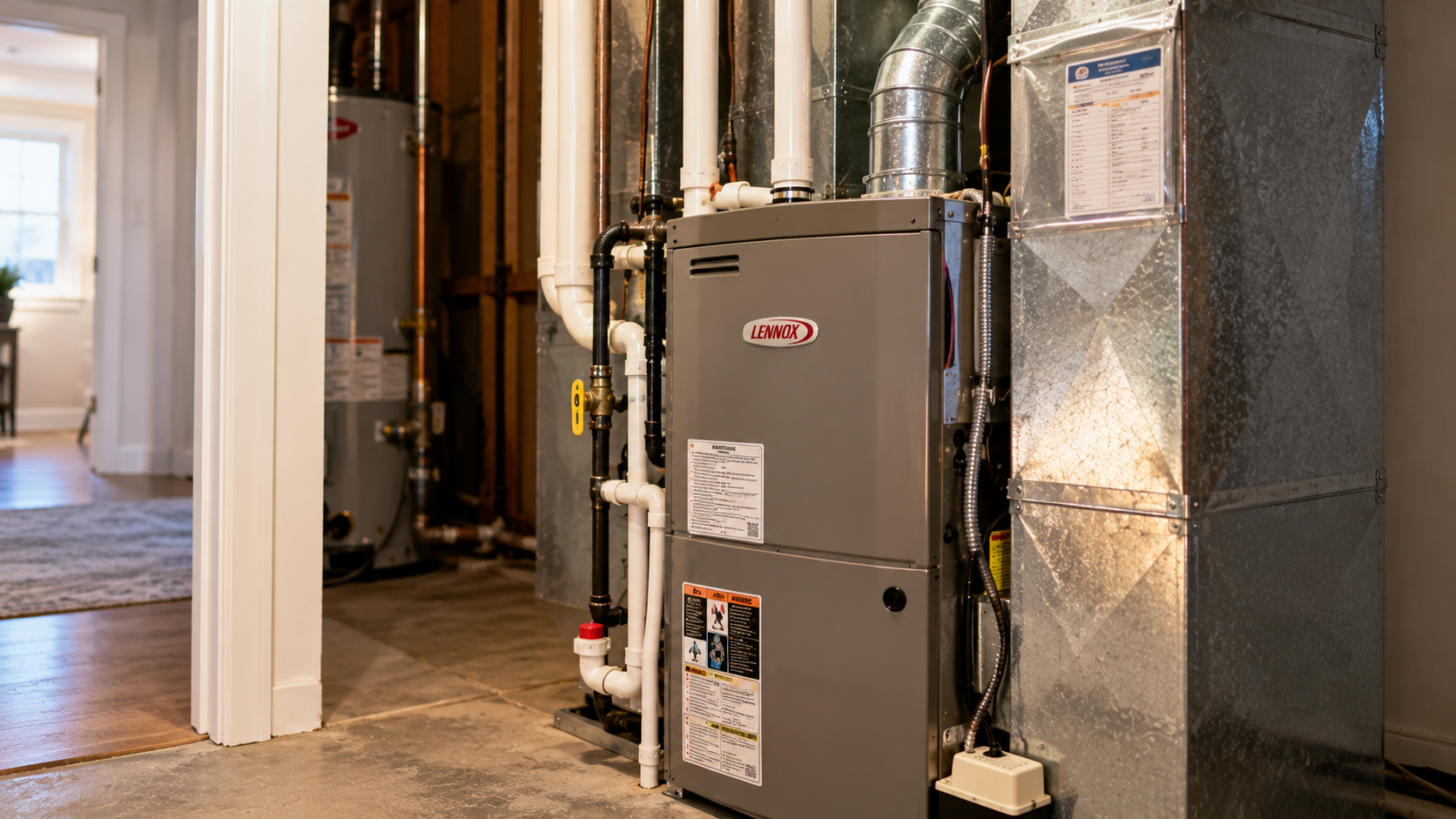
A proper tune-up is methodical. While the exact steps vary by system, here’s what a technician typically checks during a complete professional visit, and why each step matters:
- Inspecting the heat exchanger for cracks or damage, a critical safety step for gas furnaces.
- Checking and cleaning the burners so they ignite cleanly and burn efficiently.
- Testing the ignition system and confirming the furnace starts reliably every time.
- Examining safety controls and limit switches that protect your system and home.
- Testing for carbon monoxide to confirm safe operation.
- Inspecting and replacing the air filter if needed to protect airflow.
- Checking the blower motor and components for wear and proper operation.
- Calibrating the thermostat to make sure it reads and responds accurately.
- Measuring airflow and temperature rise to confirm the system is performing to spec.
- Inspecting the flue and venting for blockages or leaks.
- Tightening electrical connections and checking for signs of wear.
- Lubricating moving parts to reduce friction and extend component life.
By the end, your technician should be able to tell you plainly whether your furnace is in good shape, and flag anything worth watching before it becomes a repair. A thorough visit ends with a clear rundown of your system’s condition, so you know exactly where things stand before the coldest weeks arrive.
Also Read: Commercial HVAC Maintenance Before Summer: A Guide for Delaware Business Owners. How the same maintenance principles keep larger systems running efficiently.
Furnace Tune-Up vs. Repair: What’s the Difference
It’s worth understanding the distinction, because the two serve different purposes, and it helps you know what to expect and what to budget for.
A tune-up is preventative. It’s scheduled maintenance meant to keep a working furnace running well and to catch small issues early. Ideally, you never need a repair because your tune-ups keep problems from developing in the first place.
A repair addresses something that’s already gone wrong, like a furnace that won’t start, won’t heat, or is behaving strangely. If your technician finds a worn or failing part during a tune-up, that crosses into heater repair territory, and we’ll always explain your options clearly before doing any work.
The goal of consistent heating maintenance is simple: fewer surprises, fewer repairs, and a longer-lasting system that you can count on all winter.
Signs Your Furnace Needs Attention
A tune-up is preventative, but sometimes your furnace shows clear signs it needs a professional look sooner rather than later. Watch for these:
- Short-cycling, where the furnace turns on and off repeatedly without fully heating your home
- Weak or uneven airflow, or rooms that never reach the set temperature
- Unusual noises such as banging, rattling, or a persistent hum
- A yellow burner flame instead of a steady blue one, which can signal a combustion problem
- A noticeable jump in your heating bills without a change in how you use the system
- A furnace that is more than 15 years old and struggling to keep up
If you’re seeing any of these, don’t wait for the annual tune-up. A prompt visit can address the problem before it leaves you without heat, and your technician can tell you whether a straightforward repair or a longer-term solution makes more sense for your home.
How to Prepare for Your Tune-Up Visit
You don’t need to do much to prepare for a tune-up, but a few small steps help your technician work efficiently. Clear a path to the furnace, move any stored items away from the unit, and jot down anything you’ve noticed during the year, like odd noises, uneven heating, or a jump in your energy bills. Having a spare filter or your system’s model number on hand can help too.
It’s also a good time to ask questions. A good technician will happily walk you through what they found, explain how your system is performing, and tell you what to watch for during the season. That transparency is part of the value of a professional visit: you come away knowing your furnace is safe and ready for winter, not just that someone stopped by.
How Often and When to Schedule
Your furnace should be tuned up once a year, and the best time is fall, before you’re relying on it daily. Scheduling in September or October means any issues get resolved before the first hard freeze.
If you have a boiler rather than a forced-air furnace, the same yearly-maintenance principle applies; our team also handles boiler repair and installation to keep those systems safe and efficient. Whatever type of heating system you have, an annual professional check is the foundation of reliable winter comfort.
Booking early also has a practical upside: fall is a busy season for heating service, and scheduling ahead means you get an appointment that works for you rather than waiting during the first cold-weather rush.
When to Call Big Red Services
While a homeowner can handle basics like filter changes, a full furnace tune-up requires trained hands and the right tools, especially the safety inspections around the heat exchanger, gas connections, and venting. Our certified technicians serve homeowners across Delaware and Maryland’s Eastern Shore with thorough, honest heating service. We’ll leave you with a clear picture of your system’s condition and honest guidance on anything it needs, now or down the road.
If you’d like to lock in your annual tune-up without having to remember it each year, our Maintenance Club handles the scheduling and includes member benefits that make seasonal maintenance easy.
FREQUENTLY
ASKED QUESTIONS
How long does a furnace tune-up take?
Most standard tune-ups take about an hour, though it can run longer if your technician finds an issue worth addressing or your system needs extra cleaning.
Is a furnace tune-up really necessary every year?
Yes. Annual maintenance keeps your system efficient, protects your warranty in many cases, and, most importantly, confirms your furnace is operating safely.
What happens if I skip my furnace tune-up?
Skipping maintenance raises the risk of a mid-winter breakdown, higher energy bills, and safety issues going unnoticed. It can also shorten your furnace’s lifespan over time.
A little maintenance now saves a lot of stress later. Call Big Red at 302-985-5858 or schedule your service today, and we’ll make sure your furnace is ready to keep your home warm all winter.