If your thermostat is more than a few years old, you’ve probably wondered whether an upgrade is worth it. With heating season around the corner, now is a natural time to decide.
A smart thermostat can make your home more comfortable and your heating more efficient, but only if it’s the right fit for your system and installed correctly. Here’s what to know before you buy, so you can head into the cold months with confidence.
In the sections below, we’ll cover what a smart thermostat actually does, the signs it’s time to upgrade, and what to check so your new thermostat works smoothly with your heating system from day one.
What a Smart Thermostat Actually Does
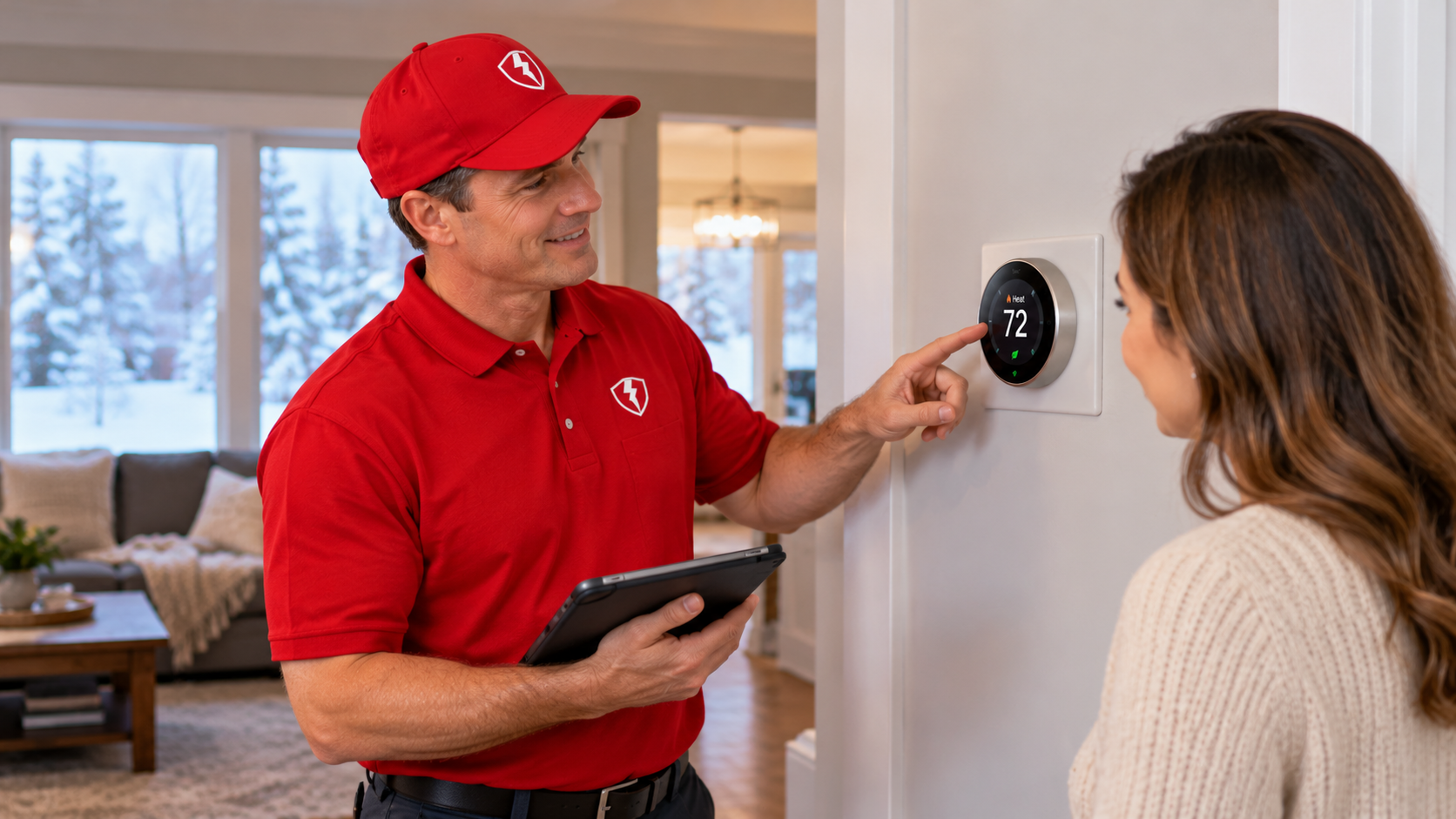
At its simplest, a smart thermostat gives you more precise, flexible control over your heating and cooling. Instead of guessing at settings or adjusting the dial by hand, you get a system that learns your routine and adjusts automatically to keep your home comfortable when you’re there and efficient when you’re not.
Most models let you control the temperature from your phone, set schedules for different times of day, and see clear reports on how much energy you’re using. Many include helpful extras like geofencing, which adjusts the temperature based on whether your phone is home, and maintenance reminders that tell you when to change your filter. Some can even sense when a room is empty and dial things back on their own.
The result is steadier comfort with less waste: heat where and when you actually need it, and less spent warming an empty house. Over a full Delaware or Maryland winter, that smarter control can add up to real savings on your heating bills.
Signs It’s Time to Upgrade Before Heating Season
A smart thermostat isn’t the answer for everyone, but a few situations make the case clearly. Consider upgrading if you notice any of these:
- Your thermostat is manual or non-programmable. If you’re still adjusting it by hand every day, you’re likely paying more than you need to.
- Rooms feel uneven. Trouble holding a consistent temperature can signal that your controls, or your system, need attention.
- Your energy bills keep climbing. Better scheduling can trim heating costs over a full season.
- The display is inaccurate. If the room never feels like the number on the screen, worn or poorly placed controls could be the cause.
- You’re often away or on an irregular schedule. Remote control and automatic adjustments pay off most when your routine varies.
If your heating system itself is aging, it may be worth pairing a thermostat upgrade with a broader look at your heating system so everything works together efficiently. Heading into the season with the right controls is one of the simplest upgrades you can make for comfort and savings.
Also Read: Is Your Home Electrical Panel Ready for Summer? Warning Signs You Shouldn’t Ignore. Why your home’s electrical health matters for every connected device.
How Much Can a Smart Thermostat Save You?
Savings vary from home to home, but the biggest gains come from eliminating waste. If you’re upgrading from a manual thermostat, automatic scheduling means you’re no longer heating an empty house all day or overnight, and features like away mode and geofencing trim usage without you having to think about it.
Your actual savings depend on your habits, how well your home holds heat, and the efficiency of your existing system. A smart thermostat paired with a well-maintained furnace or heat pump delivers the best results, which is why it’s worth making sure your heating system is in good shape before you upgrade. The thermostat controls the system, but it can only work with the efficiency your equipment already has.
What to Check Before You Install
A smart thermostat is only as good as its compatibility with your setup. Before you buy, it’s worth confirming a few things, since this is where many DIY installs run into trouble. Getting these details right up front saves you frustration and protects your equipment.
System Compatibility
Not every thermostat works with every heating system. Homes with heat pumps, multi-stage furnaces, or older wiring need models rated for those setups. If you rely on heat pumps, be sure the thermostat is designed to control them properly, including any auxiliary or emergency heat, or you may lose efficiency and comfort. Most manufacturers offer a quick online compatibility checker, but when in doubt, a professional can confirm the right match.
The C-Wire Question
Many smart thermostats need a common wire, or C-wire, to supply steady power. Older homes across Delaware and Maryland often don’t have one, and relying on battery power alone can cause a smart thermostat to disconnect or behave unpredictably. Adding a C-wire correctly is an electrical task, so professional electrical installation ensures the wiring is safe and done right the first time.
Your Current System’s Health
A new thermostat won’t fix an aging or struggling furnace. If your system hasn’t been serviced recently, a round of heating maintenance first makes sure your upgrade actually delivers the comfort and savings you expect. Think of it as tuning the engine before you add the smart dashboard, since the two work best together.
Professional vs. DIY Installation
Plenty of homeowners install a smart thermostat themselves, and for a straightforward, compatible system it can go smoothly. The challenges come with wiring, compatibility, and heat pump configuration, which is where many DIY installs stall or cause problems down the line.
An incorrect setup can leave you with a thermostat that misreads your system, runs inefficiently, or doesn’t control your heat properly, and in some cases it can even damage equipment. When there’s any doubt about wiring or compatibility, professional heating installation takes the risk out of it. Our technicians confirm the right fit, handle the wiring safely, program the system to match your home, and make sure everything is calibrated before we leave.
Getting the Most Out of Your Smart Thermostat
Once your thermostat is installed and running, a few simple habits help you capture the full savings. Set a schedule that matches your real routine, with lower temperatures while you sleep or are away and a comfortable setting for the hours you’re home. Even a modest setback for eight hours a day adds up over a long heating season.
Take advantage of the features that do the work for you:
- Turn on geofencing or away mode so the temperature adjusts automatically when you leave and return.
- Enable filter and maintenance reminders so upkeep never slips your mind.
- Review the energy reports now and then to spot patterns and fine-tune your schedule.
- If you have a heat pump, avoid large temperature swings, which can trigger the less efficient backup heat.
Used well, a smart thermostat keeps your home comfortable while quietly trimming what you spend to heat it all winter.
When to Call Big Red Services
If you’re unsure whether a smart thermostat suits your system, or you’d rather skip the trial and error, we’re here to help. Our certified technicians serve homeowners throughout Delaware and Maryland’s Eastern Shore, and we’ll recommend the right thermostat for your setup, install it correctly, and show you how to use it so you get every bit of value from the upgrade.
Want to keep your whole system running efficiently through winter? Our Maintenance Club pairs perfectly with a thermostat upgrade, with scheduled tune-ups that protect your investment and keep your heating running at its best.
FREQUENTLY
ASKED QUESTIONS
Will a smart thermostat really lower my heating bills?
It can, especially if you’re upgrading from a manual thermostat. Smart scheduling and away modes reduce wasted heating, though your actual savings depend on your habits and how efficient your system is.
Do smart thermostats work with heat pumps?
Many do, but not all. Heat pumps need a compatible model configured correctly, so it’s worth confirming compatibility before you buy, or letting a technician handle the match.
What is a C-wire and do I need one?
A C-wire supplies constant power to your thermostat. Many smart models require one, and older homes often lack it. A professional can add a C-wire safely if yours doesn’t have it.
Heading into heating season with confidence starts with the right controls. Call Big Red at 302-985-5858 or schedule your service today, and we’ll help you choose and install the smart thermostat that fits your home.