
Your heating system runs constantly, your thermostat is set to a comfortable temperature, yet your home feels drafty and cold. Meanwhile, your energy bills keep climbing month after month.
You might blame your furnace, the weather, or poor insulation, but the real culprit could be hiding behind your walls and above your ceilings. Duct leaks silently sabotage your home heating efficiency, wasting energy and money in ways most homeowners never even realize.
How Do Duct Leaks Sabotage Your Heating System?
Your ductwork acts as the circulatory system for your home’s heating. When your furnace or heat pump creates warm air, ducts transport that precious heat to every room. At least, that’s how it’s supposed to work. When you have leaky ductwork, those heated air highways develop potholes and detours that send your warmth exactly where you don’t want it.
Duct leaks form at connection points where sections join together, around register boots where ducts meet ceiling or floor vents, at seams that weren’t properly sealed during installation, and anywhere ducts have been damaged by pests, age, or physical stress. Even small gaps and cracks add up quickly when air is flowing under pressure.
The impact on home heating efficiency is immediate and substantial. Your heating system generates the same amount of heat, but much of it never makes it to your living areas. Instead, it warms unheated spaces like attics and crawl spaces, where it does you absolutely no good. Your rooms stay cold while your system works overtime trying to compensate.
The Financial Cost Of Duct Leakage
Let’s talk about what leaky ductwork really costs you. Energy experts warn that severe duct leakage can increase heating costs. For a household spending $1,500 annually on heating, that could mean hundreds of dollars wasted each year, money quite literally disappearing into thin air.
Over a decade, that’s thousands of dollars in unnecessary energy costs. Think about what you could do with that money instead. The financial impact doesn’t stop at higher bills, either. When your heating system runs longer cycles to compensate for lost heat, it experiences more wear and tear. Components fail faster, requiring expensive repairs or premature system replacement.
Your comfort suffers too, though that’s harder to quantify in dollars. Cold spots in certain rooms, drafty hallways, and uneven temperatures throughout your home create frustration that makes your house feel less like a comfortable sanctuary. You might find yourself constantly adjusting the thermostat, layering on sweaters, or avoiding certain rooms entirely during winter.
Signs Your Home Has Duct Leaks
How do you know if duct leaks are undermining your home heating efficiency? Watch for these telltale signs that indicate you need airduct repair.
- Some rooms stay consistently colder than others despite having vents. You notice excessive dust accumulating quickly after cleaning. Leaky ductwork pulls in dust from attics and crawl spaces.
- Your energy bills are significantly higher than those of similar homes in your neighborhood. You hear whistling or rushing air sounds when your heating system runs, indicating air escaping through gaps.
- Feel your supply vents when the system runs; weak airflow suggests heated air is escaping before reaching the vent. Check accessible ductwork in your attic, basement, or crawl space for visible gaps, disconnected sections, or damaged areas.
- Look for dark streaks on ceiling vents or walls near ductwork, which indicate air leaking and pulling dusty air through gaps.
- Your heating system cycles on and off frequently trying to maintain temperature, or runs almost constantly without achieving comfortable temperatures. These patterns strongly suggest that duct leakage is preventing efficient heat delivery to your living spaces.
Where Duct Leaks Hide And Why They’re Hard To Find
The hidden impact of duct leaks on home heating efficiency comes partly from the fact that most ductwork is completely out of sight. Your ducts run through attics, crawl spaces, between floors, and inside walls; all places you rarely, if ever, see or access.
Connection joints are the most common leak locations. Sections of ductwork connect with metal collars, and these joints often have gaps that were never properly sealed. Over time, vibration from the system widens these gaps. Register boots where ducts connect to ceiling or floor vents frequently develop leaks around the perimeter where metal meets drywall or flooring.
Flexible ductwork, common in modern homes, can develop tears or become crushed in tight spaces, creating leaks and airflow restrictions. Return air plenums, the large boxes that collect air returning to your furnace, often have numerous penetrations for wiring and plumbing that were never properly sealed.
Even brand-new ductwork can have leaks if the installation quality was poor. Building codes in many areas don’t require duct pressure testing, so contractors may install systems that leak significantly right from day one without anyone knowing.
The Solution: Professional HVAC Duct Sealing
Addressing duct leaks dramatically improves your home heating efficiency and can lower energy bills by hundreds of dollars annually. While some homeowners attempt DIY sealing with duct tape (which ironically is one of the worst materials for sealing ducts), professional HVAC duct sealing delivers far superior and longer-lasting results.
Professional technicians use specialized materials designed specifically for ductwork. Mastic sealant, a paste-like substance, creates permanent airtight seals at joints and seams. Metal-backed tape rated for HVAC applications provides secure sealing for specific applications. Aeroseal, an innovative technology, actually seals leaks from inside the ductwork by injecting sealant particles that adhere to leak edges.
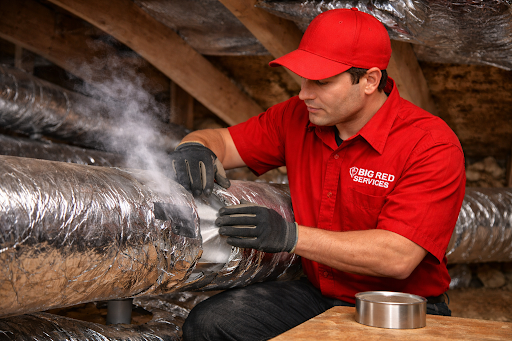
Professionals also have the tools and training to identify leaks you’d never find yourself. They use pressure testing equipment to measure exactly how leaky your system is, thermal imaging cameras to locate hidden leaks behind walls, and airflow meters to verify improvements after sealing. This comprehensive approach ensures thorough sealing that maximizes your home heating efficiency gains.
Also Read: Why HVAC Technician Certification Matters For Heating Services
The Role Of Ductwork Insulation
Sealing leaks is only part of the equation. Even airtight ducts lose heat through their walls when they run through unheated spaces like attics or crawl spaces. Proper duct insulation wraps ducts in protective barriers that help keep heat inside where it belongs.
This is especially important for attic ductwork, where temperature differences between warm supply air and cold attic air can be substantial in winter conditions. Uninsulated ducts in these spaces can lose a noticeable amount of heat before air reaches your vents, reducing comfort and efficiency. Insulating properly sealed ducts creates the most efficient heat delivery system possible.
Look for ducts wrapped in fiberglass insulation with a foil or vapor barrier. Industry guidelines recommend at least R-6 insulation for attic ducts and R-4.2 or higher for ducts in other unconditioned spaces. Many older homes lack adequate duct insulation or have insulation that has deteriorated over time.
DIY Inspection Vs. Professional Airduct Repair
While you can inspect accessible ductwork yourself and apply mastic sealant to visible leaks, professional air duct repair offers significant advantages. Most of your ductwork is inaccessible without removing drywall or insulation. Professionals have the experience to work in tight attic and crawl space environments safely and effectively.
They also address problems beyond simple leaks. Crushed or kinked flex ducts, improperly sized sections, disconnected runs, and design flaws all impact your home heating efficiency. A comprehensive professional assessment identifies all these issues and provides solutions that DIY approaches miss.
The cost of professional duct sealing typically ranges from $1,000 to $2,500 for a whole-home job, depending on home size and the extent of leaks. In homes with significant duct leakage, this investment can pay for itself over time through lower energy bills, with savings continuing year after year
Maximizing Your Investment For Lower Energy Bills
To get the most from duct sealing and achieve the lowest possible energy bills, combine it with other efficiency improvements. Ensure your attic has adequate insulation of at least R-38 in most climates. Seal air leaks around windows, doors, and other penetrations in your home’s envelope. Maintain clean air filters so sealed ducts can deliver maximum airflow.
Schedule regular HVAC maintenance to keep your system running efficiently. Even perfectly sealed ducts can’t compensate for a poorly maintained furnace or heat pump. Replace aging equipment with high-efficiency models that work optimally with your newly sealed duct system.
Consider a smart thermostat that optimizes heating schedules and temperatures for maximum efficiency. When your ducts deliver heat efficiently, smart temperature management multiplies your savings even further.
Also read: How To Reduce Heating Costs During The Coldest Winter Months
The Long-Term Benefits Of Addressing Duct Leaks
The hidden impact of duct leaks on home heating efficiency goes beyond just higher bills. Sealed ductwork improves indoor air quality by preventing dusty attic air from being pulled into your living spaces. Your heating system experiences less wear and lasts longer when it doesn’t have to work as hard. Home value increases with documented efficiency improvements and lower operating costs.
Most importantly, your comfort improves dramatically. Even temperatures throughout your home, fewer drafts, and better humidity control all contribute to a more pleasant living environment. You’ll actually enjoy being in every room of your house rather than avoiding cold spots.
Conclusion
If you suspect leaky ductwork is undermining your home heating efficiency and driving up costs, don’t wait another heating season to address it. Contact qualified HVAC professionals for a duct assessment. Many companies offer free or low-cost inspections that reveal exactly how much energy you’re losing.
The investment in professional HVAC duct sealing and ductwork insulation pays dividends immediately through lower energy bills and improved comfort. Stop heating your attic and start enjoying the warm, efficient home you deserve.