Electric vehicles are on the rise across Delaware and Maryland, and for good reason. Lower fuel costs, reduced emissions, and a smoother driving experience are converting more households every year. But once you bring an EV home, one question comes up fast: how do you charge it properly?
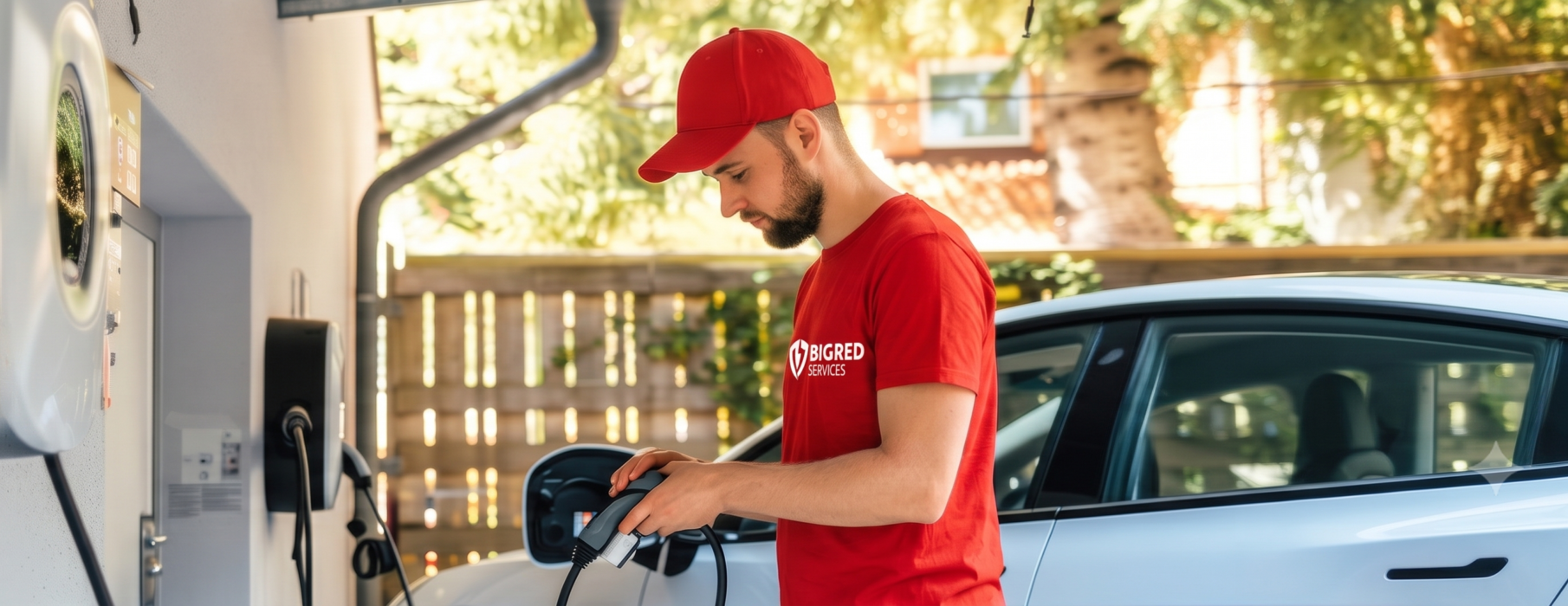
Plugging into a standard outlet works in a pinch, but it’s slow. A level 2 home charging station changes the experience entirely, adding 20 to 30 miles of range per hour, so your car is ready every morning without any planning. Getting one installed is simpler than most homeowners expect, and the benefits start from day one.
Here’s what Delaware homeowners need to know before scheduling their EV charger installation.
Level 1 vs. Level 2 Charging: What’s the Difference?
Level 1 charging uses a standard 120-volt outlet, the same kind you’d plug a lamp into. It adds roughly 3 to 5 miles of range per hour, which means a full charge on a long-range EV can take 40 hours or more. It works, but it’s not practical for daily driving.
Level 2 charging operates on a 240-volt circuit, the same voltage used by dryers and electric ranges. It charges 4 to 8 times faster than Level 1, and most EV owners find it fully meets their daily needs. A Level 2 charger is what most residential electricians and automakers recommend for home use.
Level 3 (DC fast charging) is what you see at commercial charging stations. It’s not designed for home installation and requires infrastructure that isn’t practical or cost-effective for residential use.
What Does Home EV Charger Installation Cost in Delaware?
Most homeowners in Delaware can expect to pay between $500 and $1,500 for a complete Level 2 charger installation, including the unit, wiring, and labor. The exact cost depends on a few variables:
- Panel capacity: If your electrical panel can handle the additional load, installation is straightforward. If your panel needs an upgrade, that adds to the cost.
- Distance from panel to garage: The farther the run, the more wiring is needed.
- Charger brand and features: Smart chargers with app control and energy monitoring cost more than basic units.
- Permits and inspections: Delaware requires permits for new 240-volt circuits, which a licensed electrician handles as part of the job.
Federal tax incentives can help offset costs. The Alternative Fuel Vehicle Refueling Property Credit allows homeowners to claim up to 30% of installation costs on qualifying charger installations, subject to income and eligibility requirements. Ask your tax advisor whether you qualify.
Also Read: Is Your Home Electrical Panel Ready for Summer? Warning Signs You Shouldn’t Ignore
Do You Need a Panel Upgrade First?
A Level 2 charger typically requires a dedicated 240-volt, 50-amp circuit. Most homes built in the last 20 to 30 years have a 200-amp panel with enough capacity to add one without issue. Older homes, particularly those with 100-amp or 60-amp panels, may need a panel upgrade first.
Signs your panel may be undersized include frequently tripped breakers, flickering lights when appliances run, or a panel that’s already crowded with no open slots. A licensed electrician can assess your current capacity and tell you upfront what’s needed.
The good news: if you do need a panel upgrade, it benefits your whole home, not just your EV charging. More capacity gives you room to add other upgrades in the future, whether that’s an induction range, a hot tub, or additional HVAC equipment.
Why Professional Installation Matters
A Level 2 charger isn’t a DIY project. A 240-volt circuit requires a licensed electrician, a permit, and final inspection requirements that exist to protect your home and your family. Unpermitted electrical work can create fire hazards, void your homeowner’s insurance, and cause problems when you go to sell.
A licensed electrician will size the circuit correctly, use the right wire gauge for the run length, install a proper weatherproof outlet or hardwired connection, and pull the permit so the work is inspected and on record. The whole job typically takes a few hours when no panel upgrade is needed.
When to Call Big Red Services
We install home EV charging stations for homeowners across Delaware and Maryland’s Eastern Shore, handling everything from the permit to the final inspection. Our licensed electricians assess your panel, recommend the right circuit configuration, and install your charger safely and correctly.
Whether you’re getting your first EV or upgrading from a slow Level 1 setup, our residential electrical services team makes the process straightforward. Visit Electrical Installation Services to learn more, or call us at 302-985-5858 to schedule your installation.