
Maryland is beautiful in the spring — blooming trees, warming temperatures, and that fresh post-rain smell. But if you own a home in the Baltimore area, Annapolis, or anywhere across the state, you already know that those March-through-May showers can bring more than just flowers. They bring serious water, and lots of it.
Baltimore and the surrounding region typically sees 3 to 5 inches of rain per month during spring, and western Maryland can see even more. When that water saturates the soil around your home, your basement becomes ground zero for potential flooding.
The good news? Your sump pump is your home’s quiet hero, and with a little care, it’ll keep your basement dry all season long. Don’t get damped this spring — a simple maintenance routine goes a long way toward solid basement flood prevention.
Getting to Know Your Sump Pump
Before diving into maintenance, it helps to understand what you’re working with. Most Maryland homes use either a submersible or pedestal sump pump sitting in a pit in the basement floor. When groundwater rises high enough to lift the float switch, the pump kicks on, pushes water out through a discharge pipe, and shuts itself off once the pit is empty.
Simple in theory. Powerful in practice. But only if it’s been properly maintained.
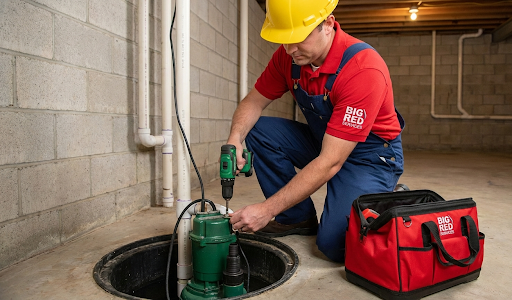
If your pump is aging or showing signs of wear, it might be worth exploring sump pump installation or sump pump repair before spring storms arrive in full force. Getting ahead of it now saves you from scrambling during a late-April downpour.
How to Test a Sump Pump
One of the most important things you can do right now is learn how to test a sump pump. Seriously — it takes about five minutes and gives you real peace of mind.
Here’s what to do: Slowly pour 2 to 5 gallons of water directly into the sump pit. The float switch should rise with the water level and trigger the pump to turn on within just a few seconds. You’ll hear it kick in, watch the water drain out quickly, and then the pump should shut off on its own once the pit empties.
Run through this process two or three times to make sure the pump is performing consistently. If it hesitates, makes grinding or humming noises, or doesn’t shut off automatically, that’s your signal to look into sump pump repair before things get serious.
You can also use a multimeter to check that your outlet is delivering 110 to 120 volts during operation. If the numbers are off or the outlet is tripping your GFCI, that’s worth addressing right away.
Your Spring Sump Pump Service Checklist
Think of spring sump pump service as your pump’s annual physical. Here’s how to approach it so you’re covered from the first spring shower to the last.
Clean Out the Pit
Every quarter, unplug the pump and use a wet/dry shop vac to clear out any sediment, gravel, or leaves that have settled at the bottom. Maryland’s freeze-thaw cycles can push debris into your pit over winter, so spring cleaning is especially important. Rinse the inlet screen with clean water and avoid harsh chemical cleaners — mild soap works fine and won’t corrode the components.
Check the Discharge Line
Your discharge pipe needs to direct water at least 10 to 20 feet away from your foundation, ideally sloping downhill. If the pipe terminates too close to the house, that water will just find its way back in — defeating the whole purpose. Some Maryland counties like Howard County have specific requirements about discharge line distance, so it’s worth confirming your setup meets local codes.
Inspect the Check Valve
The check valve prevents water from flowing back into the pit after the pump shuts off. If it’s stuck or malfunctioning, your pump ends up doing twice the work. Disassemble it and give it a quick soak in a 1:1 vinegar and water solution for about 30 minutes — this helps dissolve the mineral buildup that Maryland’s hard water tends to leave behind.
Elevate the Pump
If you haven’t already, consider raising your pump 6 to 12 inches off the pit floor using bricks or a concrete block. This simple step keeps it above sediment that settles at the bottom during heavy flooding events, protecting the impeller and extending the pump’s life.
Maryland Spring Rain Flood Preparation
Great basement flood prevention doesn’t start in the basement — it starts in your yard. Make sure your gutters and downspouts are cleared out before spring rains arrive. Clogged gutters dump water right at your foundation, which overwhelms your sump pit faster than you’d expect.
Grading matters too. If the soil around your home slopes toward the house rather than away from it, rainwater will pool against your foundation. A 6-inch slope away from the house makes a real difference. For homes that see heavy inflow during 2-plus-inch rain events, adding a French drain system can relieve the pressure on your pump significantly.
For extra peace of mind, inexpensive water alarms (usually under $20) can sit in your sump pit and send you app notifications if water levels rise unexpectedly — great for when you’re away from home during a storm.
Power Backup
Here’s the thing about Maryland’s spring thunderstorms: they knock out power. And when the power goes out, a standard sump pump stops working right when you need it most. That’s why a battery backup system isn’t a luxury — it’s a necessity.
Test your backup by simply unplugging the main pump. Your backup should kick in within 10 seconds or less. If the switchover takes longer, or if the battery is more than two to three years old, replace it before peak storm season. AGM batteries are a great choice over traditional flooded lead-acid options because they handle the vibration from stormy conditions better and are generally more reliable over time.
Pairing your system with a UPS can get that switchover time down to under three seconds — a huge advantage during the fast-moving fronts that roll through Maryland in April and May.
When to Call in the Pros: Sump Pump Repair In Maryland
Even the most diligent homeowner will hit a point where a pump needs professional eyes. If your pump runs continuously, makes grinding or shrieking noises, keeps tripping the breaker, or if water is rising faster than the pump can handle — it’s time to call for help. Sump pump repair in Maryland professionals bring tools like borescopes to inspect impeller wear, dye tests to check for seal leaks, and amp meters to measure whether your motor is drawing too much current.
Annual or bi-annual professional inspections typically run $150 to $250 in Maryland, which is a small price compared to the cost of a flooded basement.
If you’re in the Annapolis area, Annapolis plumbing repair specialists are familiar with the region’s stormwater regulations and can make sure your setup is fully compliant with 2026 codes. Book early — emergency calls spike after major spring rains, so scheduling by late February or early March gets you priority service.
Conclusion
Maryland’s spring rains are coming whether we’re ready or not. The difference between a dry basement and a flooded one often comes down to a few simple maintenance steps done consistently.
Test your pump, clean the pit, check the backup battery, and make sure your discharge line is doing its job. If anything feels off, reach out to a local professional who knows Maryland’s unique flood landscape.
A well-maintained sump pump is one of the best investments you can make in your home — and with the right prep, you can enjoy spring in Maryland for exactly what it’s meant to be: beautiful, refreshing, and completely outside your basement.