
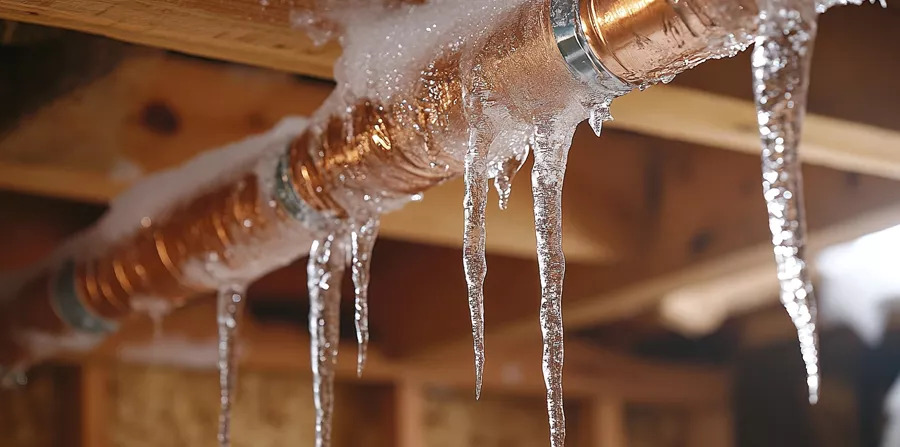
December cold snaps arrive with little warning, and when temperatures plummet overnight, your home’s plumbing becomes surprisingly vulnerable. Knowing what to do if pipes freeze can mean the difference between a minor inconvenience and a plumbing disaster that costs thousands in water damage.
Let’s walk through exactly how to handle frozen pipes and, even better, how to prevent frozen pipes from freezing in the first place.
Recognizing the Signs of Frozen Pipes
Before you can solve the problem, you need to confirm you’re actually dealing with frozen pipes. The most obvious sign? Turn on your faucet and get only a trickle of water—or nothing at all. That’s your first red flag.
Look for frost on exposed pipes, especially those in unheated spaces like basements, crawl spaces, garages, or along exterior walls. You might also notice strange odors coming from your drains. When ice blocks your pipes, it traps gases and odors that would normally flow through your plumbing system.
Pay special attention to pipes on exterior walls, in unheated areas, and anywhere cold drafts can reach them directly. Older homes without proper insulation face higher risks during December cold snaps.
Also read: Heater Repair Service: Spot Heating Issues Early Before Winter
What to Do If Pipes Freeze: Your Step by Step Action Plan
Don’t panic when you discover frozen pipes. Quick, careful action prevents the worst-case scenario—burst pipes flooding your home. Here’s exactly what you need to do.
Keep That Faucet Running
This might seem strange, but leave the affected faucet open. As you work to thaw the frozen pipe, even a small trickle of running water helps melt ice faster. More importantly, flowing water relieves pressure building up inside the pipe. Pressure relief is crucial because it’s what prevents pipes from bursting.
Turn on both hot and cold taps. If water flows from one but not the other, you’ve narrowed down which line is frozen. Keep that faucet open throughout the entire thawing process.
Locate and Warm the Frozen Section
Now comes the thawing work. Start heating the pipe section nearest to the faucet and work backward toward the coldest area. This approach allows melting ice to drain out through the open faucet rather than creating more dangerous pressure buildup.
Use a hair dryer, heating pad, or hot towels wrapped around the pipe. Keep the heat source moving constantly along the pipe—never hold it in one spot too long. Space heaters positioned nearby can warm the general area, but keep them away from anything flammable and never leave them unattended.
You can also soak towels in hot water, wring them out, and wrap them around the frozen pipe section. Replace with fresh hot towels every few minutes to maintain consistent warmth.
Critical Mistakes to Avoid
Here’s where people often create bigger problems than they started with. Never use a blowtorch, propane heater, or any open flame device to thaw pipes. The extreme heat damages pipes, creates fire hazards, and can cause fittings to fail catastrophically.
Don’t use electrical heating devices near standing water—electrocution is a real risk. Never ignore the problem hoping it resolves itself. Frozen pipes rarely thaw quickly enough on their own to prevent bursting, and the longer you wait, the more likely you’ll face expensive frozen pipes repair.
Also read : Winter Plumbing Protection: Prevent Frozen And Burst Pipes
When Professional Help Is Non Negotiable
Sometimes knowing what to do if pipes freeze is simply knowing when you’re out of your depth. Call a licensed professional immediately if you can’t locate the frozen section after checking all accessible pipes.
You absolutely need professional help if the frozen pipe is inside a wall, ceiling, or floor where you can’t reach it. Don’t attempt DIY demolition to access these pipes—you’ll likely cause more damage than the frozen pipe itself.
If you’ve been working to thaw a pipe for 30-45 minutes without any improvement in water flow, stop and call for help. You might be dealing with a more extensive freeze than you realized.
Notice any cracks, bulges, or deformities in the pipe? These indicate ice expansion has already damaged the pipe. Don’t wait for it to burst—call a plumber right away for frozen pipes repair. When multiple pipes throughout your house are frozen simultaneously, you’re facing a serious problem that requires professional assessment and intervention.
How to Prevent Frozen Pipes Before the Next Cold Snap
The absolute best approach to frozen pipes? Never having them in the first place. These prevention strategies protect your plumbing before temperatures drop.
Insulate Your Vulnerable Pipes
Pipe insulation is remarkably inexpensive and incredibly effective at preventing frozen pipes. Focus your efforts on pipes in unheated areas like basements, attics, crawl spaces, and garages. Foam pipe sleeves, heat tape, or even newspaper wrapped around pipes provide valuable protection.
Pay special attention to pipes on exterior walls and any pipes that have frozen before—they’re likely to freeze again. Hardware stores sell pre-slit foam insulation that slides right onto pipes in minutes. For about $20-30, you can insulate the most vulnerable pipes in your entire home.
Seal Every Air Leak You Can Find
Cold air sneaking into your home is often the real culprit behind frozen pipes. Check for gaps where pipes enter your home from outside, cracks in basement or crawl space walls, and openings around electrical wiring or ventilation.
Seal these gaps with caulk or spray foam insulation. Even tiny gaps let in enough cold air to freeze pipes during a December cold snap. Walk through your basement or crawl space on a cold, windy day and you’ll actually feel cold air streaming through these gaps.
Let Faucets Drip During Extreme Cold
When temperatures drop below freezing, especially overnight, let cold water drip from faucets connected to exposed pipes. You don’t need a steady stream—just a slight drip keeps water moving through the pipes. Moving water is much harder to freeze than standing water.
This strategy works especially well for faucets on exterior walls or those that have frozen before. Yes, you’ll use a bit more water, but that’s infinitely cheaper than dealing with burst pipes and water damage.
Maintain Consistent Indoor Temperatures
Keep your home heated to at least 55°F even when you’re away. Don’t try to save money on heating bills by letting your house get too cold—the potential cost of frozen pipes repair far exceeds any heating savings.
Open cabinet doors under sinks, especially those on exterior walls. This simple action allows warm air from your home to circulate around the pipes. It’s one of the easiest ways to prevent frozen pipes during cold weather.
Prepare Your Outdoor Plumbing
Outdoor faucets and hoses are particularly vulnerable during December cold snaps. Disconnect all garden hoses and drain outdoor faucets completely. Water left in outdoor faucets or attached hoses will freeze and can crack the faucet or even the pipe behind it.
If possible, shut off water to outdoor faucets from inside your home using the indoor shutoff valve. Drain the remaining water from the outdoor portion of the pipe. Install insulated faucet covers for additional protection—they cost just a few dollars and provide excellent freeze protection.
What Happens When Pipes Actually Burst
Despite your best efforts to prevent frozen pipes, sometimes they burst anyway. If this happens, speed is everything. Immediately shut off your main water supply—every homeowner should know exactly where this shutoff valve is located and how to operate it.
Turn off your water heater to prevent damage if the burst is on a hot water line. Open all faucets to drain remaining water from your plumbing system and relieve pressure. Then immediately call both a plumber for frozen pipes repair and your homeowner’s insurance company to report the damage.
Remove valuable items from the affected area as quickly as possible. Use towels, buckets, and a wet-dry vacuum to remove standing water. The faster you remove water, the less secondary damage you’ll face from mold and structural problems.
Preparing for Future December Cold Snaps
Once you’ve dealt with frozen pipes, take steps to ensure it never happens again. Here are a few you can follow:
- Consider having a licensed plumber inspect your home’s most vulnerable areas and recommend permanent solutions. This might include relocating exposed pipes or adding extra insulation in problem areas.
- Install smart home water sensors that alert you to temperature drops or water leaks. These devices connect to your smartphone and can warn you about problems before they become emergencies.
Some even monitor temperature in vulnerable areas and send alerts when it drops below safe levels.
- Keep emergency supplies readily accessible including a dedicated hair dryer for thawing pipes, extra pipe insulation materials, and your plumber’s contact information.
Store these items together where you can grab them quickly during an emergency.
Also read: How to keep your home warm and energy efficient all winter long
Conclusion
Understanding what to do if pipes freeze protects you from expensive repairs and major headaches during December’s unpredictable weather. The key is acting quickly when you suspect frozen pipes, using safe thawing methods, and knowing when to call for professional frozen pipes repair.
Even better? Take preventive action now to protect your plumbing before the next cold snap hits. Simple steps like insulating vulnerable pipes, sealing air leaks, and maintaining adequate heat prevent frozen pipes far more effectively than even the best emergency response.