
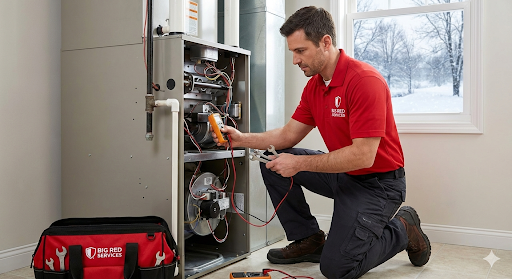
If you’ve lived in Delaware for even one winter, you already know the drill. One morning, it’s a pleasant 50°F, and by nightfall, you’re staring at a temperature in the teens. That kind of weather whiplash isn’t just uncomfortable for you; it’s genuinely brutal on your heating system.
Understanding how Delaware winters put extra strain on furnaces and heat pumps can save you from a surprise breakdown in the middle of a cold snap, and more importantly, it can save you a lot of money.
Why Delaware’s Winter Climate Is Uniquely Challenging
Delaware doesn’t get the bone-chilling Arctic winters that the Midwest does, but don’t let that fool you. The state averages 25 to 30°F lows in January and February, with roughly 20 to 30 nights dipping below freezing each year. What makes Delaware particularly tough on heating equipment isn’t just the cold — it’s the constant back-and-forth.
Temperatures can swing from a mild afternoon in the low 50s to a brutal overnight low in the teens. That kind of rapid cycling forces your heating system to start, stop, ramp up, and cool down repeatedly. Over time, that stress adds up fast.
Add in the coastal humidity across Sussex County — where salt-laden air and moisture levels of 60 to 80% are common — and you’ve got a recipe for accelerated wear on both heat pumps and furnaces.
How Delaware Winters Strain Heat Pumps
Heat pumps are efficient and smart, but they have a well-known weakness. Efficiency gradually decreases as temperatures fall, though modern systems still operate effectively in cold weather.
Instead of extracting warmth from the outside air (which they do brilliantly in milder weather), they switch over to resistive backup heating, which can literally double your monthly energy bill.
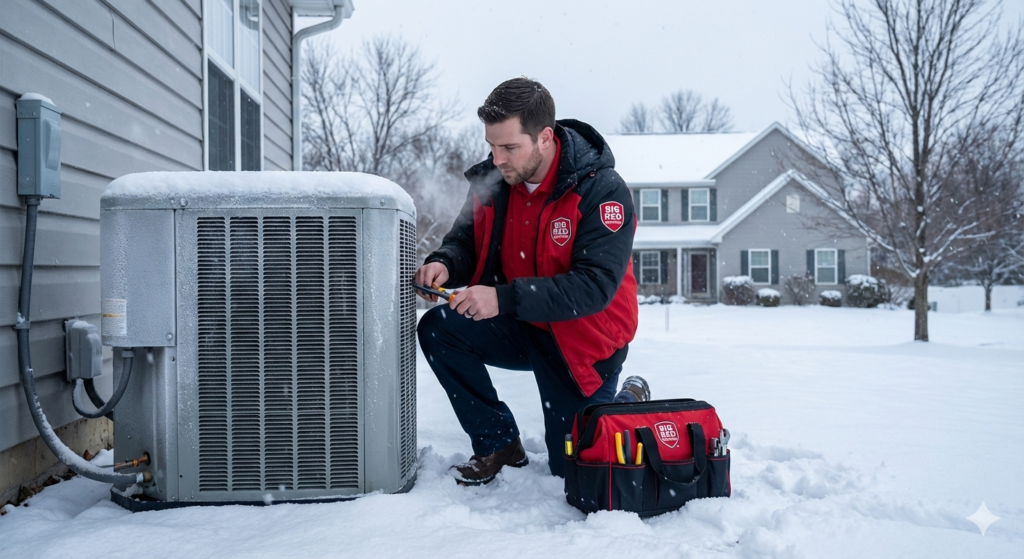
But the efficiency drop isn’t the only problem. Frozen heat pump coils are one of the most common issues homeowners face during Delaware winters. When humidity and freezing temperatures combine, ice builds up on the outdoor unit’s evaporator coils, restricting airflow and forcing the system into defrost mode.
For older units, especially those 15 years or older, this cycle of icing and defrosting is particularly punishing. Compressors can suffer from oil starvation, coils corrode from salt air exposure, and the system can freeze solid in extreme cases.
This is exactly the kind of situation that leads to a call for emergency heating repair in the dead of winter — something no homeowner wants to deal with at midnight in January.
If you’re in Sussex County or anywhere near the coast, heat pump repair in Delaware becomes a more frequent need simply because salt air degrades fins and coils two to three times faster than in inland areas. Investing in a unit with coated coils or scheduling more frequent inspections can meaningfully extend the life of your system.
Also Read: A Common Cause of Poor Airflow and Why it Matters
The Pressure Delaware Winters Put on Furnaces
Gas and oil furnaces are generally better suited to handle cold weather than heat pumps, but Delaware’s unpredictable winters still take a real toll. During extended cold snaps, a furnace can run 12 to 18 hours per day, pushing heat exchangers to temperatures around 1,200°F.
That kind of continuous operation creates thermal fatigue, and over time, heat exchangers can crack — a problem that’s both expensive and potentially dangerous due to carbon monoxide risks.
Furnace problems in the cold weather often trace back to a few common culprits. Short cycling — where the furnace turns on and off in rapid succession — is a big one. This happens when a home is poorly insulated or when a thermostat overshoots, and it puts enormous stress on igniters and belts.
Delaware’s dry winter air creates another sneaky problem. Indoor humidity often drops to 20 to 30% during cold months, which causes dust to circulate more freely and clog air filters rapidly. A clogged filter forces the blower motor to work harder, increasing its power draw.
Left unchecked, this can burn out the motor entirely. During peak winter, you should be swapping filters every three to four weeks at a minimum.
Snow and ice blockages are another concern. If snow drifts cover your furnace’s intake or exhaust vents, the system will trigger a safety lockout to prevent dangerous conditions.
That means no heat for two to four hours while you dig out and reset the system — or longer if the blockage causes damage that requires a heating repair in Delaware.
Winter HVAC Maintenance Makes All the Difference
The good news is that most of these problems are preventable. Committing to winter HVAC maintenance before the season starts — ideally in September or October — can eliminate the vast majority of breakdowns. A professional tune-up will clean the coils, check refrigerant levels, lubricate motors, test all safety controls, and calibrate your thermostat.
For heat pumps, ask about low-ambient kits that allow the system to function efficiently down to -15°F, or consider a dual-fuel hybrid setup that pairs your heat pump with a furnace. This way, the furnace takes over automatically when temperatures drop into the danger zone for heat pump efficiency. It’s one of the smartest upgrades Delaware homeowners can make.
For furnaces, adding a whole-home humidifier is a surprisingly effective move. Keeping indoor humidity around 40 to 45% reduces the amount of dust circulating in the air, which means your filters last longer and your blower motor works less. Sealing leaky ductwork can also cut your energy bills by a good amount.
Smart thermostats like Ecobee or Nest learn your habits and reduce the extreme temperature swings that cause short cycling. They won’t just make your home more comfortable — they’ll actively protect your heating equipment from unnecessary wear.
Also Read: The Hidden Impact of Duct Leaks on Home Heating Efficiency
Conclusion
Even with the best maintenance routine, Delaware winters can still catch your system off guard. If you notice uneven heating across rooms, unusual noises like banging or squealing, a sudden spike in your energy bill, or your system cycling on and off more than usual, don’t wait. These are early warning signs that something is wrong, and catching it early is almost always cheaper than waiting for a full breakdown.
Whether you need heat pump repair in Delaware after a freeze, emergency heating repair during a cold snap, or just a seasonal checkup to keep things running smoothly, staying ahead of the problem is always the better play. Delaware winters may be unpredictable, but your heating system doesn’t have to be.